
There exist a few kinds of dermal fillers on the market, all of which have the same intention: to decrease the signs of aging. The only realDermal Fillers differences among them are how long they take, what they are made of, and how they work.
Collagen

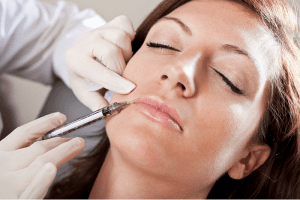
Collagen is an injection, thus making it a rather soft product. Because it is based on humans, there are hardly ever any negative reactions and it usually sits well with anybody who takes it. The primary advantage is the fact that it has lidocaine in it, meaning the process is less uncomfortable for a person, making it a good choice for those who fear pain. On average, the product will remain good for up to six months, though it must be refrigerated.

Hyaluronic Acids

Restylane and Perlane are two examples of a non-animal based hyaluronic acid Dermal Fillers. The former product will typically last upwards of six months, where the latter product seems to last a little bit longer than that since it is a bit of a more robust product. Captique, another similar product, will normally last upwards of four months. Juvederm, on the other hand, is a new product of its kind that has been proven to last even longer: upwards of twelve months. Like collagen, it is a soft product that injects with ease.

Hylaform is another type of this product, though unlike the others, it is avian based. It is quite similar to Restylane except it does not last quite as long. However, it does come in numerous different levels of concentration for the purposes of property tailoring for a different level of wrinkles.

Semi-Permanent Dermal Fillers

Manufactured by BioForm, Radiesse is a product that of which is greatly compatible with people due to the fact that it contains a natural body substance: calcium hydroxyapatite. Though it may take multiple injections before the desired result is achieved, when this occurs, it should last upwards of two years. The natural body substance functions as a way to increase the production of new collagen. However, included with this advantage is one drawback: It causes a little bit more pain and bruising than that of other methods.

Manufactured by Sanofi-Aventis, and equally as compatible as the previous mention, Sculptra comes delivered within a vial. Ideally, one would reconstitute the substance at least three hours prior with lidocaine and sterile water. Since the water is used, the results will not be immediate, though it should occur within two days afterwards. Because the final product contains lidocaine, it will not be quite as painful as other methods, though this is a method requiring future injections at least a full month in between. This may last upwards of two years.


For the first time ever, an attempt has been made to monitor and control places that provide Botox treatments and “filler” injections. With 5,000 clinics performing approximately 200,000 Botox treatments for wrinkles and filler treatments designed to plump lips and sagging skin each year in the United Kingdom, the industry is in dire need of regulation. Although there are plenty of legitimate practitioners working in the industry, there are also far too many rogue practitioners administering treatments they are not qualified to give. To combat this, only doctors, dentists and nurses will be invited to participate in this attempt at regulation, along with organizations that provide Botox and filler injections. Once accepted, these practitioners will receive certificates of approval proving the quality and safety of their service.

The main problem with this proposed system is that it is voluntary. The charity Action Against Medical Accidents declared that if the Government does not make this system statutory, many people will be left at risk because an industry cannot be trusted to regulate itself properly – especially an industry that is as large and prosperous as the cosmetic industry. The Government requires any major cosmetic surgery to be regulated, but as Botox and filler injections are relatively minor non-surgical procedures, they can be offered by just about any business. Peter Walsh, the chief executive of Action Against Medical Accidents declares that his charity will continue “using our experience and influence to make this scheme as robust as it can be.”

One of the best reasons to create a regulated cosmetic industry is to help reduce the amount of botched cosmetic procedures. The most high profile examples of cosmetic treatments gone wrong are usually celebrities. For example, in 2003, Leslie Ash, the star of the television show Men Behaving Badly, had filler injections on her lips. The procedure went wrong, resulting in a look known as the “trout pout.” It is hard to determine exactly how many people have suffered from cosmetic treatments gone wrong or adverse side effects since many people are extremely embarrassed as to what has happened to them and would prefer to keep it quiet rather than raise a national ruckus. Also, without strict guidelines, many practitioners may turn to shady and dangerous treatments. For instance, in 2005, two government reports were published detailing how several practitioners supplying filler injections were using material from both animal and human corpses – material that could have been infected with hepatitis and other deadly diseases.

Cosmetic treatment technologies continue to evolve, making beauty easier and cheaper for women to attain. This is good news for women seeking to appear younger, particularly because research has shown a correlation between attractiveness and career success. And since today’s non invasive treatments are less costly and require less recovery time than surgical procedures, more and more women are climbing on the cosmetic treatment bandwagon. But these newer treatments are temporary compared to traditional cosmetic surgery, requiring recurring visits to cosmetic treatment providers, and costs and time invested can add up. Also, experts worry that the growing fad may have societal repercussions in which younger and younger women are turning to cosmetic treatments in order to feel acceptable. And finally, little studies have been conducted to determine the long-term effects of non invasive treatments.

It’s true that cosmetic treatments are getting easier. Where cow-sourced collagen formerly required skin testing, human collagen and Botox now require no skin test. The treatments are quick and easy, with virtually no recovery time. When compared with traditional cosmetic surgery, fillers and injections are much more affordable, costing hundreds of dollars instead of thousands of dollars. But since these treatments are not permanent, women must routinely have the treatments repeated. And experts say that the non invasive treatments are simply postponing the traditional plastic surgeries, such as eyebrow lifts and face lifts. In the end, women may pay more than if they had opted for the traditional surgery in the first place. Also, traditional surgery has a longer history, so side-effects and long-term effects are well known by doctors.

But many argue against the growing fad altogether. Younger women are undergoing non invasive cosmetic treatments than ever before. Books such as “Bodylove: Learning to Like Our Looks and Ourselves, A Practical Guide for Women” by Rita Freedman and “Midlife Crisis at 30: How the Stakes Have Changed for a New Generation – And What to Do About It” by Lia Macko and Kerry Rubin address the negative repercussions that this fad has on society. Women see celebrities and even their peers undergoing treatments, and they feel like they don’t measure up. Indeed, studies have shown a correlation between career success and attractiveness, so it may be that the trend is already irreversible. Cosmetic enhancements may be no different than any other technology taking over the globe. Once we go there, it’s hard to turn back.