
Many people are fighting to reverse the effects of aging. Now with an alternative to plastic surgery, less invasive facial treatments are being sought after. Some of theseFace Lift include, laser treatments, injections of Botox and dermal fillers.

These treatments are great for those aging employees who are trying to stay younger looking so as to stay competitive in the job market. There are also professions where you want to look younger, like the others to fit in. You don’t want the age to start showing on your face. With the economy being so fragile, these treatments are a lot less expensive to obtain.

New dermal fillers are an excellent way to correct sagging cheeks and laugh lines. These fillers are made of a complex sugar that is found in many tissues in the body called hyaluronic acid. The most popular treatment is one an injection to treat expression lines between the brows and on the forehead. This popular treatment is called injectable botulinim toxin.

These less invasive treatments are being chosen over plastic surgery because they are only a fraction of the cost with much less recovery time. These treatments can cost anywhere from $400 to $1000 with a few hours recovery time, some injections can even be done on your lunch break, while a facelift can cost anywhere from $6,000 to $15,000 and take weeks to recover. The only downside is that people are spending thousands of dollars getting treatments repeated for maximum results which can end up costing you more than the facelift would have.

Many plastic surgeons have turned their businesses to offering these fillers and injections, as their surgery business is declining. However, there are some issues that fillers and injections will not correct, so plastic surgery is required. It has been estimated that plastic surgeons are accumulating over 50% of their income from fillers and injections, like Restylane and Dysport.

There is a growing concern among experts that people will be on the bandwagon to try any new thing that becomes available. This can put their health at risk and it is best to stick with the methods that are proven to help, rather than gamble on a new, untested method.
Although an estimated 2.6 million Americans receive Botox treatments every year 75% of patients are secretive about it. In Britain, secrecy about treatment runs high as well, with 72% of women and 81% of men not saying a word about their treatments. Usually, when complimented on their improved appearance, patients make up a cover story, sometimes attributing their sudden youthfulness to the use of a sunblock or a moisturiser.

In a recent survey in southern California, plastic surgeons estimated different percentages to the level of secrecy. The average estimate is about 45%.

Dr. Edward Domanskis, a plastic surgeon in Newport Beach, estimated it to be from 60% to 70%. Dr. Ashkan Ghavami, a plastic surgeon in Beverly HIlls, approximated it to be about 60%. Dr. Val Lambros, a plastic surgeon in Newport Beach, guessed it to be from 30% to 40%. Dr. John Di Saia, a plastic surgeon in San Clemente and Anaheim, reckoned it to be less than 10%. And Dr. Michael Persky , a plastic surgeon in Encino, made an educated guess at about 15%, with 99.9% for celebrities.

Doctors are asked to keep the treatments a secret. Patients ask doctors to only call them on their mobile phones within a certain time frame. Women might only come for treatments while their husbands are out of town on a business trip to allow for enough time for the bruising to heal. Some of these women get all their treatments done all at the same time. Others spread them out; for instance, lips one month, Botox the next month, and so on.

Sculptra, a new, slow-acting dermal filler, is especially popular with secretive patients. During their research, the manufacturers learned that a certain population wanted gradual, rather than a sudden improvement in their appearance. Consequently, doctors usually ask patients if they would prefer a slower transformation in their features. With Sculptra injections, it may take from 6 to 10 weeks for the full effects to show. For secretive patients, this is a perfect solution. However, the effects of Botox and other even fillers are also easy to hide. According to Dr Val Lambros, “If you fill nasolabial folds it’s pretty easy to hide, but more advanced uses of fillers in other parts of the face, like around the lower lids can bruise and be harder to hide. Of course the chance of bruising is higher the more you want to avoid it.”

Amid growing concerns over cosmetic treatments being done at inappropriate settings, the Independent Healthcare Advisory Services (IHAS) is launching a voluntary register of injectable cosmetic treatment providers for botox and dermal fillers.

After its start in the early 90’s for cosmetic purposes, Botox has continued to be in use by people from all walks of life, such as celebrities and regular folk. It works to reduce wrinkling when people make facial gestures by paralysing nerves in the upper face. Dermal fillers on the other hand, fill in imperfections on the lower face and can also produce a lip pout or bigger cheeks.

Despite undoubted risks, many still continue to turn to these treatments. Currently in the UK, there are over 5,000 providers carrying out nearly 200,000 treatments each year. Some of the fillers offer temporary solutions, while others are permanent. With so many providers, it’s about time more regulation was put in place for the safety of consumers.

The new register requires treatment providers to pay registration and annual fees, in addition to promising a face-face consultation with all clients prior to any treatment. Providers must also ensure that the treatments take place in a safe and sterile environment by either a doctor, dentist, or registered nurse. The IHAS has yet to disclose where the collected fees will go and how they will be put to use.

Though some say it’s an attempt by the industry for self-regulation, heavy criticism has already started coming from plastic surgeons. A recent poll of the British Association of Aesthetic Plastic Surgeons concluded that only 4% would consider signing up. However, the consensus is that a separate set of new European regulations that are being discussed currently are said to likely be more robust and not disguised with other small changes not as widely known.

This registry begs the question for both providers and consumers, is it really worth it? The providers profit off consumers who wish to attain immortality in looking young, but the technical process for providers to keep their business in accordance with the law now seems quite tedious for the upkeep of such practices. Though it is pro-consumer by demanding more in standards, the future looks dim.

Dermatologists have some encouraging news for everyone who wants to recapture Youthful Skin and skin tone but are hesitant to undergo any type of surgery.Youthful Skin According to new dermatology studies, there is a new method that uses a combination of soft dermal fillers and tissue tightening techniques that can practically rub out your wrinkles and renew old skin.
The landscape of dermatology and how it deals with aging has changed dramatically. Dermatologists no longer look at aging skin as particular wrinkles or folds. Instead, dermatologists look at the entire face. This new approach treats soft tissue as support below the visible layers of skin which in turn supports the deeper underlying fat layers for Youthful Skin.

With this view, dermatologists now realize that cheek volume is an important part of re-establishing the skin care balance and assignation most patients want in a younger looking appearance. Volumetric loss of this underlying cheek fat layer makes wrinkles and folds more pronounced.

There are many dermal filling agents available today that can fix facial contour imperfections that result from aging. First, a dermatologist will make sure to determine what a patient wants to improve about their face. What follows afterwards depends on patient preference and what needs to be treated. It is then determined what substance will be best suited to treat the patient’s unique contour imperfections and volume irregularities.

Deeper and denser dermal fillers, like calcium hydroxylapatite, polylactic acid, dimethyl methacrylate, hydrogen dioxide and hyaluronic acid, are are typically employed to add volume to volume irregularities. These compounds also diminish the wrinkles formed from bottom of the nose to both corners of the mouth.

The reason dermatologists are excited about these developments is because the more the field determines about facial anatomy, especially the varied lipid sections of the cheek and the deposits of discrete lipids that collect in middle of the facial structure, the more exacting they can be. These studies can greatly increase a dermatologist’s ability to restore vitality, voluminosity, youthful appearance to the face. It aids in adding the right shape the cheek during the volumetric lifting process.

In conclusion, dermatologists conclude that volumetric enhancement using thicker and deeper dermal fillers is rapidly becoming the key lynch pin of an effective facial and dermal revitalization for patients seeking a youthful appearance without having to undergo any major surgery.

The cosmetic enhancement industry has seen rapid growth over the past ten years. The sheer number of images that we are exposed to of people receiving treatment to fight the effects of aging is staggering. You see them in movies, television, and magazines. As a matter of fact, a study conducted by the American Society of Plastic Surgeons predicts that the number of cosmetic procedures undergone each year will have grown by an amazing four hundred percent between 2005 and 2015. A large part of the reason for this is that injections have been replacing more invasive surgical procedures such as face lifts. Injections are both less expensive and offer almost no downtime in comparison to surgical procedures, making them a very attractive option.

Recently, a panel discussion on the future of cosmetic enhancements was held in Toronto, where many of the city’s most respected plastic surgeons, cosmetologists, and dermatologists met to discuss some of the latest changes and the future of the industry. Dr. Sheetal Sapra, director of dermatology at the Institute of Cosmetic and Laser surgery says that back in 1990, nearly all of the cosmetic work that was conducted in Canada was performed by plastic surgeons. This has changed quite drastically. Now only about twenty percent of the work that they do is surgical in nature.

The reason for this change is something called combination therapy. Combination therapy is the use of several different facial injections in combination with one another to receive the desired cosmetic effects. Some of the treatments that may be undergone include Botox, which is a neurotoxin that temporarily paralyzes the muscles of the face, causing them to relax and allowing wrinkles and creases in the face to smooth out. Other treatments such as Restylane, Juvederm, and Perlane contain within them synthetic fillers that help to rejuvinate a sculpt the skin. These fillers include hyaluronic acid and collagen, which are natural proteins produced by the body that help keep tissue healthy. They may also include artificial chemicals that help give form to the face. Other treatments include laser treatments which can be used in order to remove brown spots or rosacea from the face. Fractional tightening is another option which can be used in order to smooth wrinkles and creases, improve the texture of the skin, and fight acne scars.

Dr. Stephen Mulholland, one of Canada’s most respected plastic surgeons, claims that about sixty minutes of work and three thousand dollars is enough to take five years off of somebody’s face today.

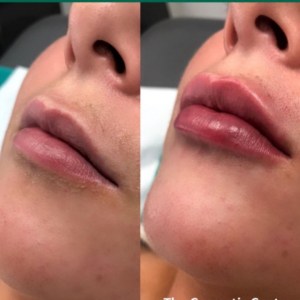
Lip augmentation treatment is a cosmetic procedure that is popular today among the routine cosmetic options that help women look younger. It increases the size of the lips. TheLip Augmentation upper and lower lip may be treated at the same time or one may be treated alone. On the majority of sites where patients can discuss their cosmetic procedures only 50% of the women who have had lip augmentation were happy with the results. It is a simple procedure that can have great benefits, so why do so many people regret having it?



Many plastic surgeons believe that the main cause of bad lip augmentation treatment is because the injector is inexperienced. Without thorough knowledge of the subject they tend to inject too much filler. Since it is easier to add more filler later than it is to remove excess, it is best to start with small amounts of filler and see the results.

There are different types of filler from fat to hyaluronic acid-base material such as Restylane and Juvederm. These are clear gel that is similar to what is found in the body. Fat is also a good filler because it is a permanent solution for most people. First, it needs to be harvested then injected into the lips. 30% to 50% of it grafts to the new location so it usually needs to be done twice to get the best results. Implants are permanent but sometimes are not put in the right place and end up looking lopsided. Any permanent cosmetic procedure needs to look right the first time. Otherwise, it is better to use the fillers that wear off in three to six months.

Recovery time varies. Injections take 1 to 2 recovery days but bruising and swelling may last a week. Implants and grafts take 1 to 2 recovery weeks and may be stiff for 2 to 3 months. Synthetic implants are good because they form scar tissue, so they stay in place and are never absorbed by the body, but there is the possibility of infection and rejection by the body. Fillers made from collagen taken from cadavers or cow skin can cause an allergic reaction even though the collagen is purified.

It is advisable to seriously consider whether or not lip augmentation treatment is a good idea. Even though significant complications are rare, there are risks depending on the chosen filler as well as the possibility of allergic reactions and scarring.

Cosmetic treatments and surgery seem to be recession proof with people still being very interested in turning back the clock. But, there is a fear that with the lack of regulations being so immense just about anyone can set up shop. A rise in bungled non-surgical cosmetic treatments has been reported recently, and cases are popping up at an alarming rate in courts.

Even with the recession, it is estimated that these procedures have grown in popularity by nearly 25% in the last year. There were about 5,000 facilities in the UK practicing around 200,000 procedures, in total, over the last year.

These non-surgical procedures are carried out with lasers and injections and should be performed by well-qualified medical professionals. However, the truth is, this is not always the case. This equipment can be easily obtained by non-medical personnel and anyone can open a salon and offer these services.

Typically, clinics using high-powered lasers must be registered with Healthcare Inspectorate Wales, but these cosmetic treatment facilities are not being regulated. The Independent Health Advisory Service has also failed to regulate the use of Intense Pulsed Light (IPL) treatments, and these treatments are causing most of the problems.

With no regulations being issued, the people practicing these procedures are doing so without proper training. They are practicing with nothing but an interest in making their money back on the very costly equipment they have purchased. This leads to an interest in quantity over quality, and people get hurt.

If these high-powered lasers are used at an inappopriately high setting clients can be severely burned. Clients are being left with burns resulting in permanent scarring. If the victims of these bungled operations are lucky, Clients are being left with burns resulting in permanent scarring, but the deeper burns are there for life. This irreversible damage can lead to severe psychological distress for the client.

If you are considering a cosmetic treatment, do your research. The British Association of Cosmetic Doctors has a list of licensed facilities which offer these treatments. Doctors practice under a code of ethics and are required to give you a realistic assessment of how cosmetic procedures may help you. Furthermore, if anything were to go wrong during a procedure, an investigation could be held through the General Medical Council. If this investigation found the physician to be negligent, he/she could lose their license. Please protect yourself.

Starting in May of 2009, a battle broke out between two different kinds of wrinkle smoothing injections. Botox, a product by Allergan which has been the market standard for years, faces a new competitor. This new competitor is Dysport, by Medicis. The facial injection wrinkle treatment industry is a multi-billion dollar section of the market that has traditionally been most heavily driven by Botox. While the economic crash did have an effect on many of the more costlier cosmetic options, it did not seem to have any effect on the sales of Botox. Botox, of course, is not the only facial injection on the market. It was, however, the only muscle paralyzing injection available, with all of the other options working to rejuvenate the skin rather than relax the muscles. Dysport has changed that dynamic. This puts Allergan and Medicis on more equal footing, both companies now offering both a neurotoxin and a dermal filler.

Allergan has responded to this change in the market by creating the “Botox Brilliant Distinctions” program. This program allows customers who purchase treatments from Allergan to redeem points which can be used on other Allergan treatments. Medicis, on the other hand, has created the “Dysport ‘Love it or Leave it Challenge.'” This option allows new customers to try out Dysport and receive a seventy five dollar rebate. They can then decide how much they are satisfied with the treatment, and then after three months they can buy either Botox or Dysport, receiving a second seventy five dollar rebate no matter which of the two options that they choose to go with.

According to Jeffrey Adelglass, the surgery director for SKINTASTIC which is a cosmetic company that runs its operations in Texas, customers are taking advantage of both of these programs, and truly are trying both available products. He says that there are in fact “distinct benefits to each of the treatments; they do behave slightly differently.” The savings are exciting to Adelglass as well, because they mean that his patients have more money available to use on some of his other procedures such as cosmetic laser surgery. Customers should always verify that any one who is injecting anything in to their face is a licensed medical professional and that they have had a great deal of experience with facial injections. Understanding how much experience that they have with the procedures is something that a customer should probably be aware of before they even visit their office.

Under the influence of the “Twilight” movies and the “True Blood” show, vampires have become very popular in modern culture. At the same time, dermal fillers that smooth out facial wrinkles are becoming very popular as well. Those two trends combined lead to the inevitable “vampire filler.” Because of the sex appeal currently associated with vampires, and because of the fact that the treatment uses the blood of the patient, it is no surprise that this name came to be associated with the treatment. This injectable skin treatment is made using the blood cells of the patient who is getting the treatment. It is said to be the next best thing to a face lift, and it does not require any waiting as the result of intensive surgery.

Another great thing about vampire filler is the fact that it is a completely natural treatment. Using blood platelets, the procedure stimulates the body to produce its own collagen, which is a rejuvenative protein that is good for the skin.

The process begins when blood is drawn from the arm of the patient who is going to receive the treatment. The blood is then spun around in order to separate the blood plasma from the blood cells. This process takes about six minutes. This platelet rich fluid has been used in order to repair tendons and joints for years. This liquid, which contains the platelets of the patient’s blood, is then injected back in to lines in the face, such as the wrinkles that occur around the eyes, the nose, and the mouth. Since the injection is made from the patient’s own blood, it is much less likely to lead to allergic reactions. Other dermal fillers are likely to cause uncomfortable inflammation. This means that vampire filler is less likely to lead to pain or bruising than other dermal fillers are.

The Vampire Filler injection process takes roughly twenty minutes in total. While some results are visible immediately, the full effect does not occur until about three weeks after the treatment is administered. A single injection has effects that can last for as much as two years.

Find out more about our aesthetic training courses for medical professionals here. 

A wrinkle cream is useful for those whose faces are lined with a network of wrinkles while a wrinkle filler is ideal for those who just have a few deep wrinkles.

How A Wrinkle Filler Works

A wrinkle filler does not remove the wrinkle, smooth out the skin, or erase the creases. Instead, it plumps up the wrinkles and improves the appearance of the skin. Plumping up the wrinkles makes them less pronounced and they blend better with the rest of the facial skin.

An Over-The-Counter Solution

This product does not need a prescription. It can be purchased over-the-counter. Pharmacies, beauty salons, and retail establishments that supply beauty products offer wrinkle filler creams that are quite effective.
These often sell for less than £30 and many come with a money-back guarantee.

Getting A Professional Treatment

If you feel that you need a much stronger solution for some well-defined wrinkles, then a family doctor or dermatologist can offer an injectable wrinkle filler. However, this solution is comparatively more expensive and the results are not permanent, lasting for about six months. Usually, you’ll be charged for the whole vial, which can be used for many wrinkles. There may also be the charge for the visit, depending on the doctor. The cost can average about £1000-£1300 for a visit. Since there are many variables involved, this is just a very rough estimate of the possible cost.

The most commonly used substance in an injectable wrinkle filler has been collagen. However, other substances have also been used to plump up the skin. These range from fats removed from your own body to synthetic substances. Before treatment, it is advisable to discuss the substance used as a wrinkle filler to find out if you are comfortable with the material and to learn if the doctor recommends it.

Possible Side Effects

Few side effects have been reported for either forms of treatment, the over-the-counter one or the professional visit, and long term use is generally considered safe. Allergic reactions, when they did occur, were mild.

With the over-the-counter treatment, tingling and redness may occur, which can be controlled by reducing the amount applied and the frequency of applications.

With the injection, patients have reported mild irritation. In rare cases, a mild allergic reaction occurred.

Overall, it is advisable to do an allergy test before applying a lotion or getting an injection.

You can purchase our recommended skincare by visiting our online shop here!